Sailfish vs. blue marlin: how to tell them apart
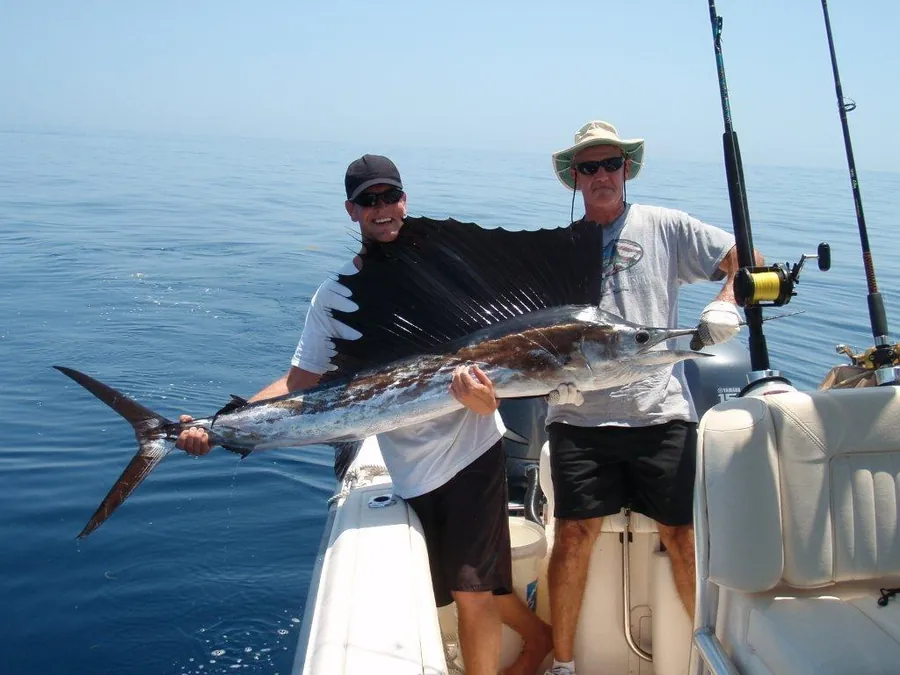
A sail versus a rounded fin: the name literally describes the difference.
Fast comparison
| Feature | Sailfish | Blue Marlin |
|---|---|---|
| Dorsal fin | Sail-shaped, taller than body depth, folds into a groove | Rounded fin, lower than body depth |
| Size | 7–8 ft, 40–80 lb typical | Larger and far heavier; grander class exists |
| Build | Slender, compressed sides | Deep, muscular chest |
| Speed claim | Often cited as the fastest billfish | Power over pace |
Photograph these features
- Dorsal fin fully raised — the sail is unmistakable
- Full profile for build comparison
- Bill length relative to head
- Flank pattern — sailfish show scattered light dots
When it is not clear-cut
Atlantic and Indo-Pacific sailfish were long treated as one species and are now often split; the sail ID holds for both. Juvenile blue marlin can show tall dorsals — check the body depth.
Identification tools can be wrong. Confirm uncertain fish with the local fisheries authority before relying on the result for harvest or possession rules.
Compare your catch
Use an AI-assisted suggestion as a starting point, then check the features above yourself.
Upload a fish photoBrowse speciesSailfish species guide
Full profile: habitat, baits, seasons and range.
Blue Marlin species guide
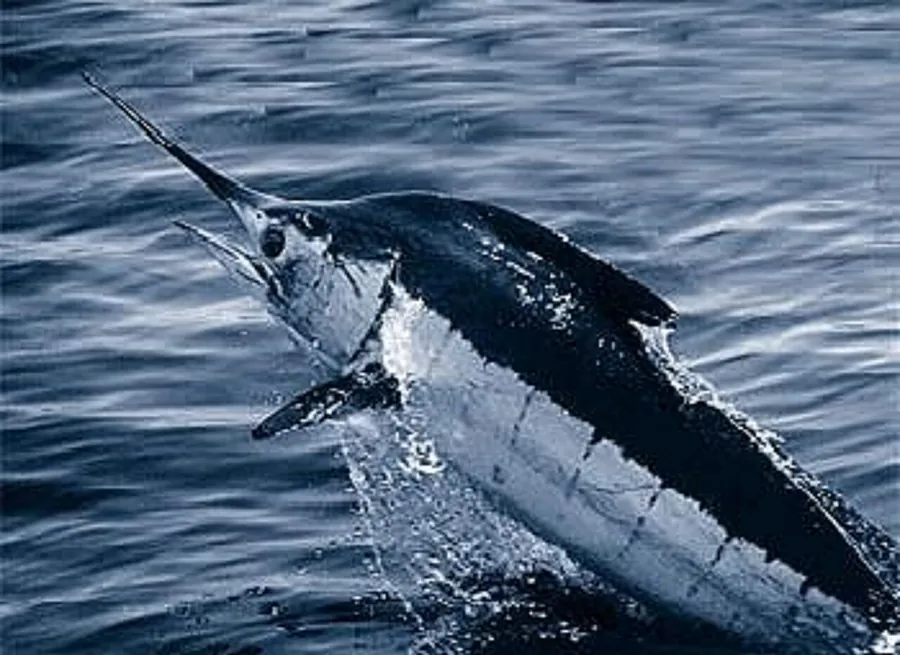
Full profile: habitat, baits, seasons and range.
Frequently asked questions
- Is the sail fin always raised?
- No — it folds flat into a groove and raises when excited or feeding.
- Which is the angler favorite?
- Sailfish: high jumps, big numbers in season, and reliable catch-and-release action.
- Can you keep them?
- Most fisheries are strictly catch-and-release for billfish; check local rules.
Authoritative references
Istiophorus albicans — Wikipedia
Makaira nigricans — Wikipedia