Red Drum vs. black drum: how to tell them apart
Two drum, two silhouettes. Barbels, eyespots and tail shape separate them instantly.
Fast comparison
| Feature | Red Drum | Black Drum |
|---|---|---|
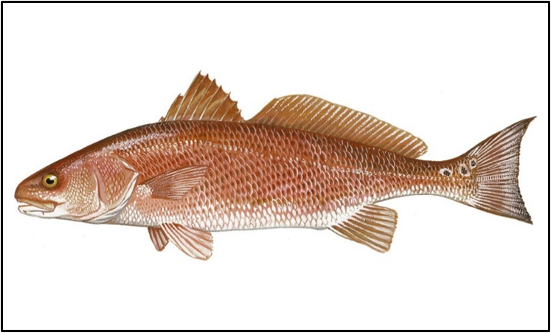
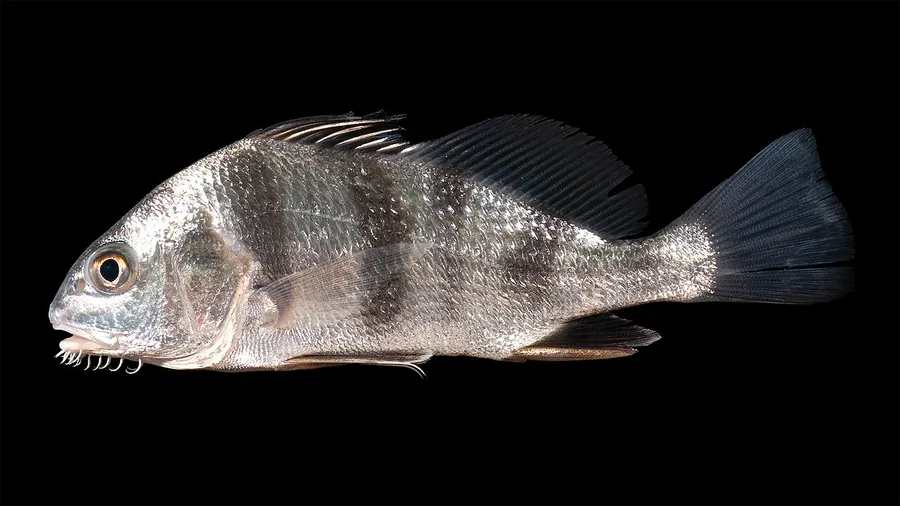
| Chin barbels | None | Several short barbels under the chin |
| Tail spots | One or more dark eyespots near the tail base | No eyespots; juveniles show dark vertical bars instead |
| Tail shape | Truncated, slightly curved edge | Broad and rounded |
| Mouth | Down-turned, feed-forward snout | Pavement teeth; crushes shell on structure |
Photograph these features
- Underside of the chin for barbels
- Tail-base close-up for eyespots
- Tail spread to show the edge shape
- Juveniles: capture any vertical bars
When it is not clear-cut
Juvenile black drum bars fade with age and bull-reds lose spots entirely some years — the chin barbels remain the constant. Big "bull" reds and black drum overlap in size and water.
Identification tools can be wrong. Confirm uncertain fish with the local fisheries authority before relying on the result for harvest or possession rules.
Compare your catch
Use an AI-assisted suggestion as a starting point, then check the features above yourself.
Upload a fish photoBrowse speciesRed Drum species guide
Full profile: habitat, baits, seasons and range.
Black Drum species guide
Full profile: habitat, baits, seasons and range.
Frequently asked questions
- Which one "drums" louder?
- Black drum are the louder croakers; you can hear them through a boat hull on calm days.
- Which is the table favorite?
- Red drum (as "redfish") dominate Gulf menus; small black drum ("puppy drum" size blacks) also rate well — large blacks get coarse.
- Do they hybridize?
- No confirmed hybrids; the two are distinguished easily by barbels and eyespots.