Rainbow Trout vs. cutthroat trout: how to tell them apart
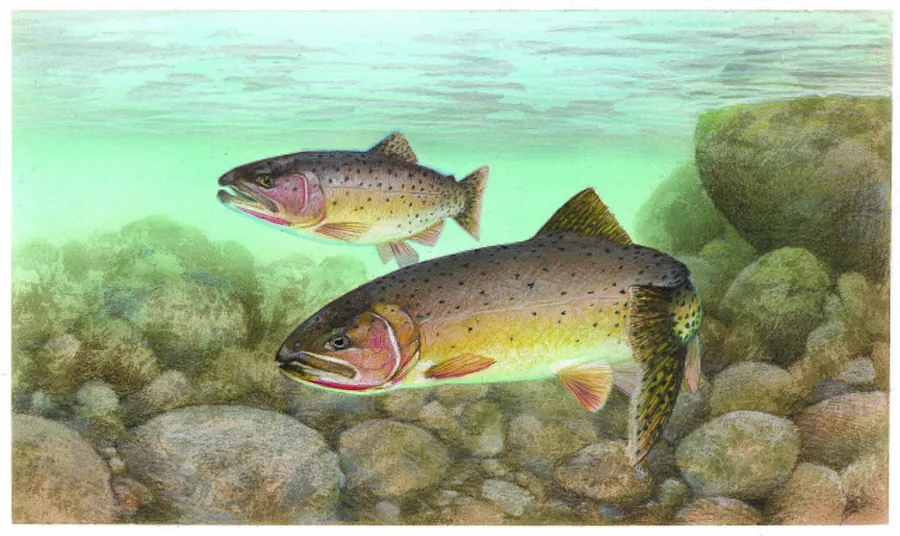
One look under the jaw: the cutthroat's red-orange slash is the namesake and the giveaway.
Fast comparison
| Feature | Rainbow Trout | Cutthroat Trout |
|---|---|---|
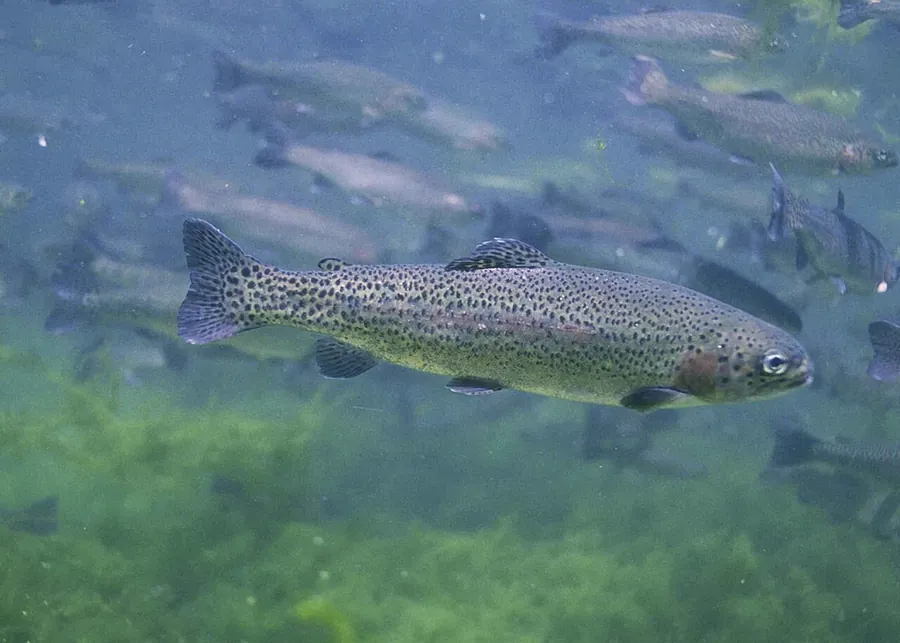
| Jaw slash | No slash under the lower jaw | Distinct red-orange slash under the jaw |
| Lateral stripe | Pink to rose lateral stripe, common | Usually absent or faint |
| Spotting | Dense small black spots, tail heavily spotted | Coarser spots, concentrated toward the tail |
| Maxilla | Ends near the eye | Often extends past the eye |
Photograph these features
- Lift the jaw to show or rule out the slash
- Full flank for the stripe and spots
- Head profile for maxilla length
- Even light — colors shift fast in spawning fish
When it is not clear-cut
Steelhead are the sea-run form of rainbow trout and lose the stripe; the slash check still separates them from sea-run cutthroat. Hybrid "cutbows" blur both — note the location.
Identification tools can be wrong. Confirm uncertain fish with the local fisheries authority before relying on the result for harvest or possession rules.
Compare your catch
Use an AI-assisted suggestion as a starting point, then check the features above yourself.
Upload a fish photoBrowse speciesRainbow Trout species guide
Full profile: habitat, baits, seasons and range.
Cutthroat Trout species guide
Full profile: habitat, baits, seasons and range.
Frequently asked questions
- What is a cutbow?
- A rainbow × cutthroat hybrid, common where stocks overlap; it may show a faint slash and a pink stripe together.
- Which is native where?
- Cutthroats are the native western mountain fish; rainbows now range worldwide through stocking.
- Same flies?
- Yes — both take standard trout fare; cutthroats in remote water are famously aggressive.
Authoritative references
Oncorhynchus mykiss — Wikipedia
Oncorhynchus clarkii — Wikipedia