Largemouth Bass vs. smallmouth bass: how to tell them apart
The classic bass confusion. Jaw length, dorsal-fin gap and color pattern separate them in seconds once you know where to look.
Fast comparison
| Feature | Largemouth Bass | Smallmouth Bass |
|---|---|---|
| Mouth / jaw | Upper jaw extends well past the rear of the eye | Upper jaw stops at or before the rear of the eye |
| Dorsal fin | Deep notch between spined and soft sections | Shallow notch; the two sections nearly merge |
| Color pattern | Green sides with a dark lateral blotch chain | Brown-bronze sides with dark vertical bars |
| Preferred water | Warm, weedy lakes, ponds and slow river banks | Cooler, clearer water with rock, gravel and current |
Photograph these features
- Straight side view with the mouth closed to show jaw length
- Dorsal fin spread so the notch depth is visible
- Full flank to capture bars versus lateral blotch
- Habitat shot — weeds or rock support the call
When it is not clear-cut
Hybrids of the two occur in some waters and share traits of both. Where the jaw and dorsal clues conflict, treat the call as uncertain and rely on the location and habitat.
Identification tools can be wrong. Confirm uncertain fish with the local fisheries authority before relying on the result for harvest or possession rules.
Compare your catch
Use an AI-assisted suggestion as a starting point, then check the features above yourself.
Upload a fish photoBrowse speciesLargemouth Bass species guide
Full profile: habitat, baits, seasons and range.
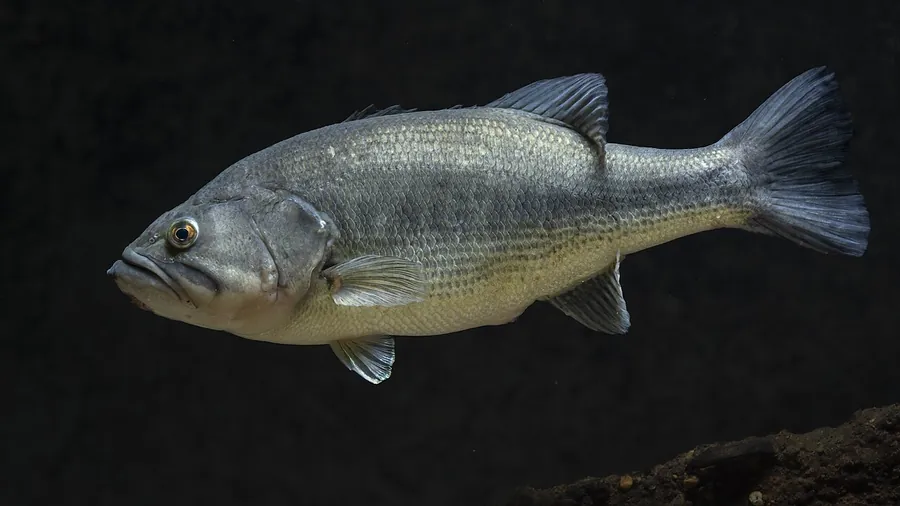
Smallmouth Bass species guide
Full profile: habitat, baits, seasons and range.
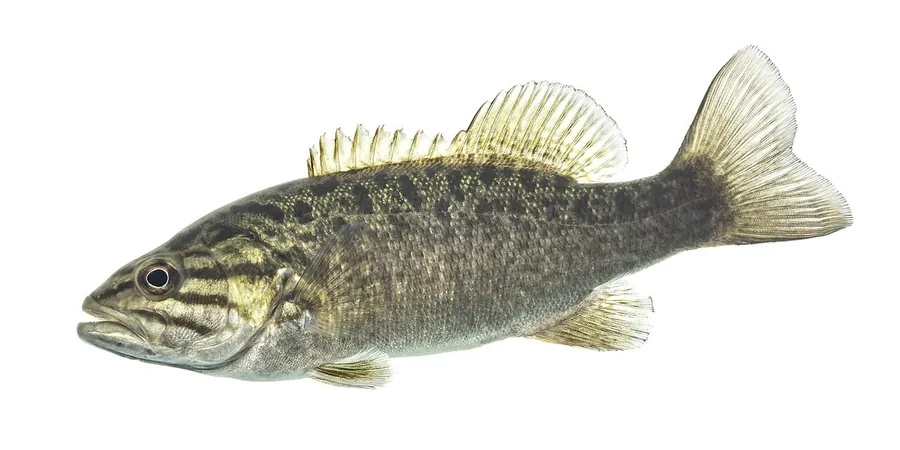
Frequently asked questions
- Which grows larger?
- Largemouth bass typically grow larger; trophy smallmouth are heavy for their length but usually run smaller overall.
- Do they live in the same lakes?
- Often in the same reservoir, but largemouth hold in vegetation and wood while smallmouth favor rocky points and current.
- Which fights harder?
- Smallmouth are famous for acrobatic, sustained runs relative to size; largemouth fight deeper with head shakes.
Authoritative references
Micropterus salmoides — Wikipedia
Micropterus dolomieu — Wikipedia