Lake Trout vs. bull trout: how to tell them apart
Two deep-water chars. Tail shape and fin edges separate them; range confirms.
Fast comparison
| Feature | Lake Trout | Bull Trout |
|---|---|---|
| Tail | Deeply forked | Flat to slightly curved rear edge |
| Fin edges | No white leading-edge marks | White leading edges, front fins |
| Spotting | Light wormy spots over dark green-gray | Orange to red spots over olive-back |
| Where found | Deep cold lakes across the North | Cold rivers/lakes of the Pacific Northwest |
Photograph these features
- Tail spread flat for the fork check
- Leading edge of a pectoral fin
- Flank spots in even light
- Location — outside the Northwest, bull trout are unlikely
When it is not clear-cut
Bull trout are protected in much of their range — know the local rules before harvesting. Lake trout live deeper; bull trout often patrol current seams.
Identification tools can be wrong. Confirm uncertain fish with the local fisheries authority before relying on the result for harvest or possession rules.
Compare your catch
Use an AI-assisted suggestion as a starting point, then check the features above yourself.
Upload a fish photoBrowse speciesLake Trout species guide
Full profile: habitat, baits, seasons and range.
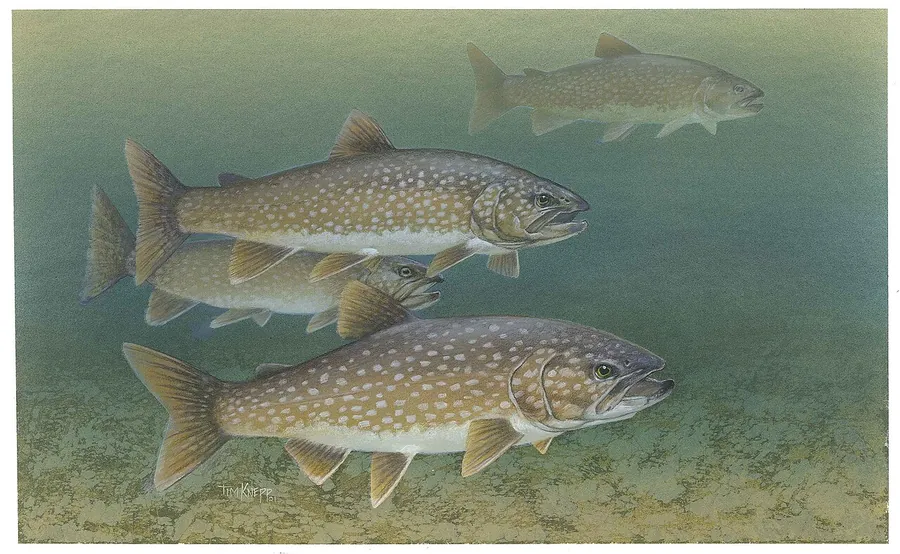
Bull Trout species guide
Full profile: habitat, baits, seasons and range.
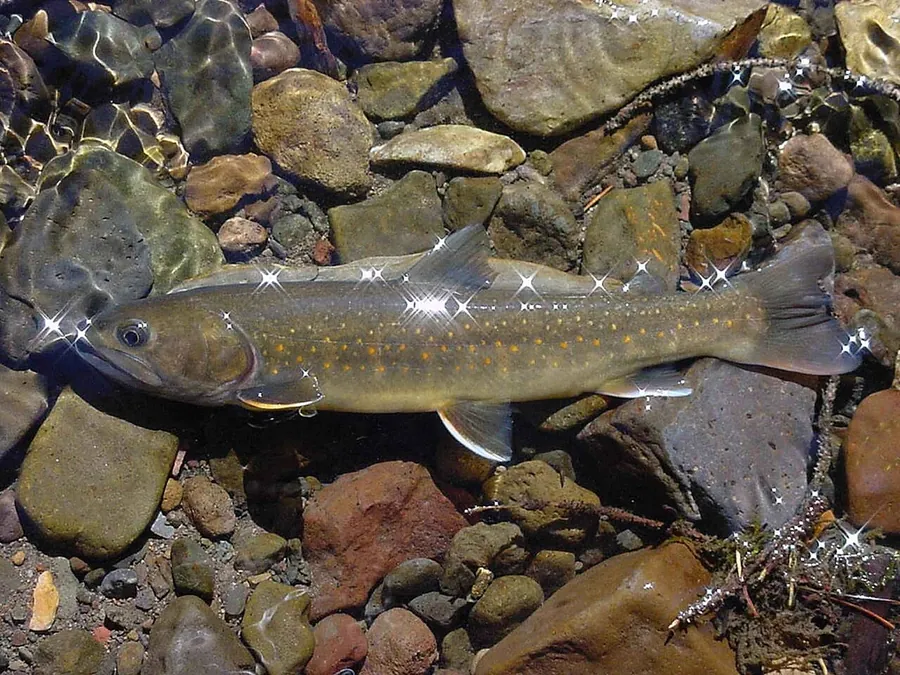
Frequently asked questions
- Are bull trout actually trout?
- They are char, like lake trout and brook trout.
- Which gets bigger?
- Lake trout — century-class fish exist in Great Lakes and northern lakes.
- Why the protection rules?
- Bull trout declined across much of their range; many waters require immediate release.
Authoritative references
Salvelinus namaycush — Wikipedia
Salvelinus confluentus — Wikipedia