Chinook Salmon vs. coho salmon: how to tell them apart
The two big Pacific salmon. Tail spots and gum line are the timeless checks.
Fast comparison
| Feature | Chinook Salmon | Coho Salmon |
|---|---|---|
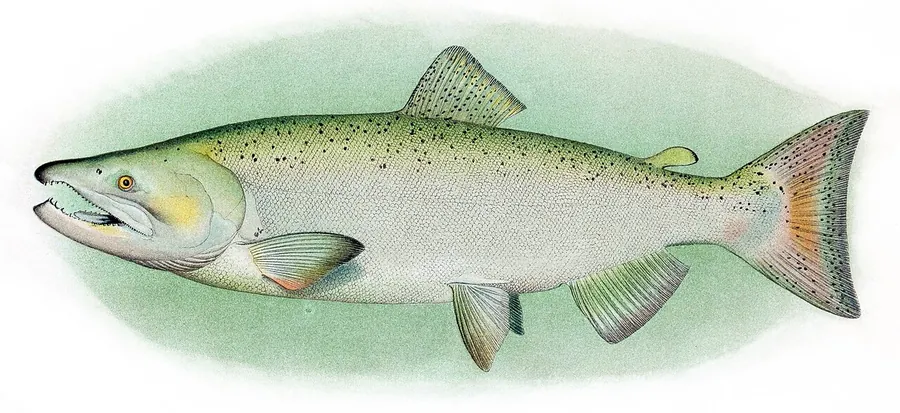
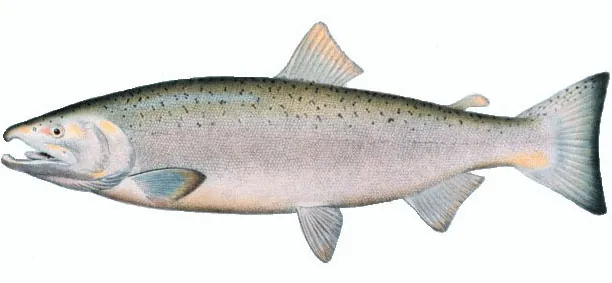
| Tail spots | Spots on both tail lobes and the back | Spots only on the upper tail lobe |
| Gum line | Black at the base of the teeth | White to pale gray gums |
| Size | Largest Pacific salmon — 15–40 lb common in runs | Smaller — 6–12 lb typical |
| Tail shape | Broad, more square | More forked |
Photograph these features
- Tail spread for spot coverage
- Lower jaw gum line in good light
- Full fish with something for scale
- Fin tips — coho can show white gum-adjacent edges
When it is not clear-cut
In rivers, both darken and the colors lie; tail spots and gum line remain readable on spawned fish. Landlocked kings (where stocked) still show the double-lobe spots.
Identification tools can be wrong. Confirm uncertain fish with the local fisheries authority before relying on the result for harvest or possession rules.
Compare your catch
Use an AI-assisted suggestion as a starting point, then check the features above yourself.
Upload a fish photoBrowse speciesChinook Salmon species guide
Full profile: habitat, baits, seasons and range.
Coho Salmon species guide
Full profile: habitat, baits, seasons and range.
Frequently asked questions
- Which fights harder?
- Chinook dive deep and bulldog; coho are famous acrobats.
- Which is "king" salmon?
- Chinook — the same fish by another name.
- Do they run together?
- Their runs often overlap by weeks; chinook typically peak earlier in a system.
Authoritative references
Oncorhynchus tshawytscha — Wikipedia
Oncorhynchus kisutch — Wikipedia