California Halibut vs. pacific halibut: how to tell them apart
A nearshore 10-pounder versus a deep-water giant — plus one scale check.
Fast comparison
| Feature | California Halibut | Pacific Halibut |
|---|---|---|
| Size potential | Rarely past 50 lb; typical 5–15 lb | Commonly 20–100 lb; records past 400 lb |
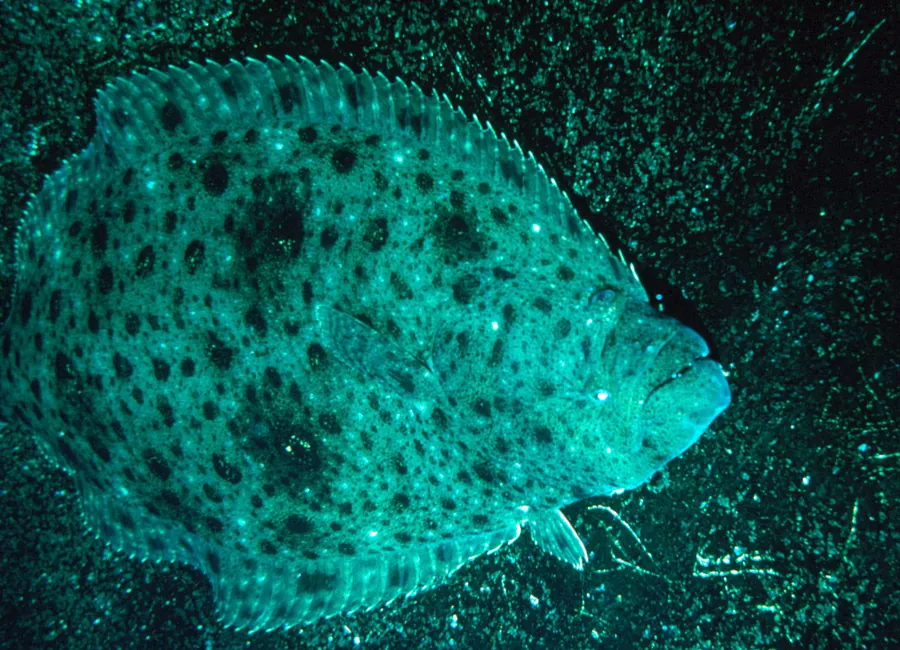
| Scales | Larger, rougher scales — gritty to the touch | Very small, smooth scales |
| Color | Sandy brown, sometimes pale "buttermilk" patches | Uniform dark-brown to olive eyed side |
| Depth | Surf zone to about 300 ft, often near beaches | Deep offshore flats, 100–1,000+ ft |
Photograph these features
- Full eyed-side profile
- Skin texture close-up on the flank
- Tail and girth with something for scale
- Depth/location note — it narrows the pair fast
When it is not clear-cut
Both are left-facing (eyed side left) — the California fish is one of the few left-eyed Paralichthys cousins, while Pacific halibut is right-eyed, a quick orientation check.
Identification tools can be wrong. Confirm uncertain fish with the local fisheries authority before relying on the result for harvest or possession rules.
Compare your catch
Use an AI-assisted suggestion as a starting point, then check the features above yourself.
Upload a fish photoBrowse speciesCalifornia Halibut species guide
Full profile: habitat, baits, seasons and range.
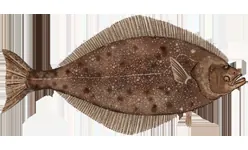
Pacific Halibut species guide
Full profile: habitat, baits, seasons and range.
Frequently asked questions
- Which side do they face?
- California halibut can face either way; Pacific halibut eyes sit on the right side. Orientation is a legitimate clue here.
- Can they be caught the same way?
- Different games: California halibut stalk surf and bay flats; Pacific halibut is a deep-drop bait-and-jig fishery.
- Which tastes better?
- Both are premium white fish; Pacific halibut fillets from bigger fish are the classic fish-and-chips flake.
Authoritative references
Paralichthys californicus — Wikipedia
Hippoglossus stenolepis — Wikipedia