Blue Catfish vs. channel catfish: how to tell them apart
Both are big-river catfish with forked tails. Anal-fin shape and spotting pattern do most of the work.
Fast comparison
| Feature | Blue Catfish | Channel Catfish |
|---|---|---|
| Anal fin | Long, straight lower edge; 30–36 rays | Rounded lower edge; 25–29 rays |
| Spotting | Adults usually plain gray-blue, few or no spots | Small dark spots scattered on the sides (most sizes) |
| Head shape | Broad, flat head; heavy shoulders | Narrower head with a more pointed snout |
| Size potential | Enormous; well past 100 lb in big rivers | Commonly 2–10 lb; trophies past 20 lb |
Photograph these features
- Anal fin stretched flat to show edge and ray count
- Flank lighting that shows or rules out spots
- Head profile from the side
- Something for scale — the size gap is real
When it is not clear-cut
Juvenile blue catfish can show faint spots, so lean on anal-fin shape when sizes are small. Hybrids are rare; the fin edge is the tiebreaker.
Identification tools can be wrong. Confirm uncertain fish with the local fisheries authority before relying on the result for harvest or possession rules.
Compare your catch
Use an AI-assisted suggestion as a starting point, then check the features above yourself.
Upload a fish photoBrowse speciesBlue Catfish species guide
Full profile: habitat, baits, seasons and range.
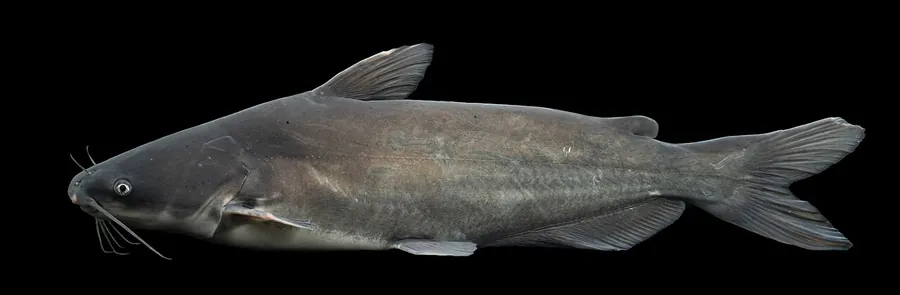
Channel Catfish species guide
Full profile: habitat, baits, seasons and range.
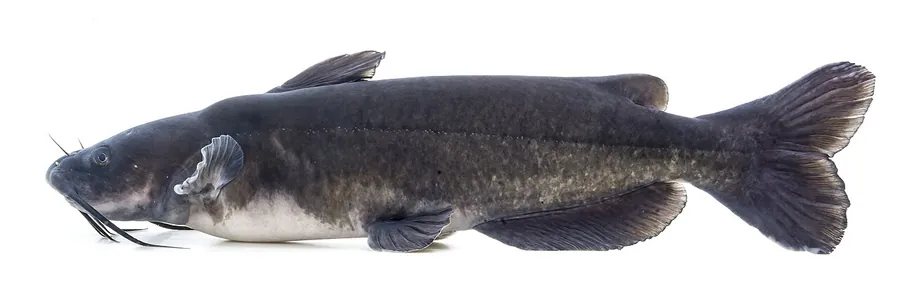
Frequently asked questions
- Which is better to eat?
- Both are table fare; many anglers prefer smaller channel cats for clean fillets, while blues from clean water fry well.
- Do they live together?
- Yes in big-river systems — channels range wider, blues favor deeper channels and holes.
- Which is the record holder?
- Blue catfish hold most of the giant-catfish records in US rivers and reservoirs.
Authoritative references
Ictalurus furcatus — Wikipedia
Ictalurus punctatus — Wikipedia