Black Crappie vs. white crappie: how to tell them apart
Same slabs, different patterns. Count dorsal spines when the pattern is washed out.
Fast comparison
| Feature | Black Crappie | White Crappie |
|---|---|---|
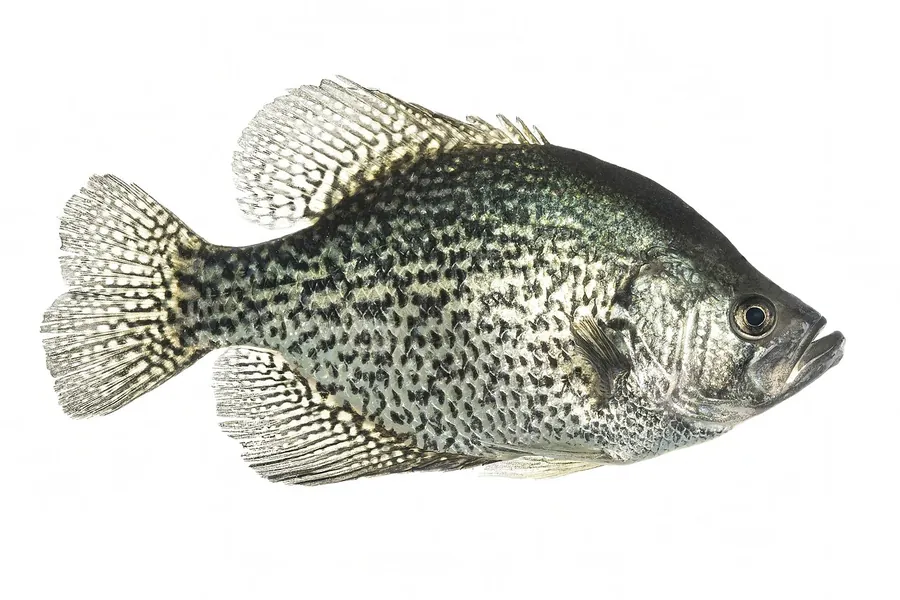
| Dorsal spines | Usually 7–8 spines | Usually 5–6 spines |
| Flank pattern | Irregular dark blotches, scattered | Faint vertical bars, evenly spaced |
| Body shape | Slightly deeper body and larger mouth | Slimmer profile, smaller mouth |
| Typical water | Clearer lakes with vegetation | Murkier lakes, oxbows and backwaters |
Photograph these features
- Dorsal fin close-up for spine count
- Flank pattern in flat, even light
- Mouth closed profile for head shape
- Photo both species if caught together — schools often mix
When it is not clear-cut
The two interbreed in some reservoirs and the pattern washes out in spawning males. When color is ambiguous, the dorsal-spine count is the standard tiebreaker.
Identification tools can be wrong. Confirm uncertain fish with the local fisheries authority before relying on the result for harvest or possession rules.
Compare your catch
Use an AI-assisted suggestion as a starting point, then check the features above yourself.
Upload a fish photoBrowse speciesBlack Crappie species guide
Full profile: habitat, baits, seasons and range.
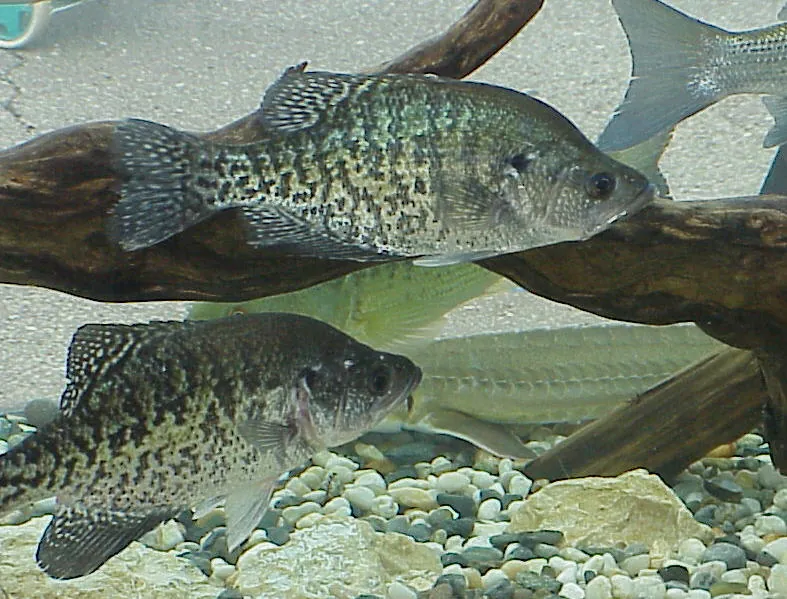
White Crappie species guide
Full profile: habitat, baits, seasons and range.
Frequently asked questions
- Which tastes better?
- Both are prized panfish; cold-water crappie of either kind fillet clean and sweet.
- Do they school together?
- Frequently overlap on brush piles; whites often suspend wider, blacks hold tighter to cover.
- Which gets bigger?
- Black crappie hold most slot and trophy records, but big whites are common in southern oxbows.
Authoritative references
Pomoxis nigromaculatus — Wikipedia
Pomoxis annularis — Wikipedia